Home / Building Habitat
Habitat
Building pollinator habitat in a backyard
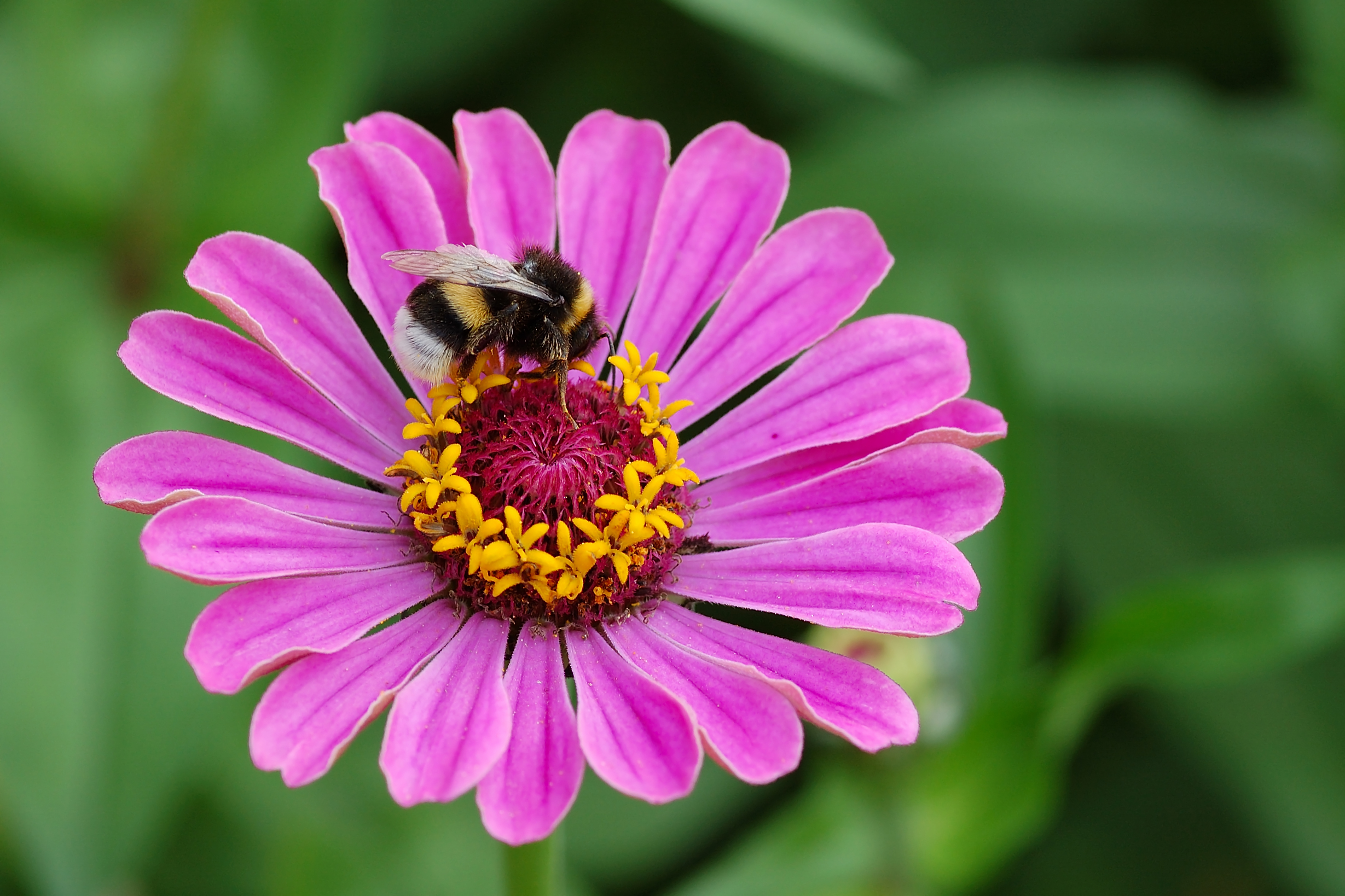
Flowers draw pollinators in, but habitat keeps them. Bees and butterflies need places to nest, shelter through winter, and find water. The practices below describe the physical structures that turn a planted bed into habitat that supports insects across their full life cycle.
Four elements of usable habitat
It helps to think of habitat as four overlapping needs. A garden that addresses all four supports more species than one offering nectar alone.
Food
Overlapping bloom from spring to autumn, plus host plants for caterpillars.
Nesting
Bare, undisturbed soil for ground-nesting bees and hollow stems for cavity nesters.
Water
A shallow source with footing so insects can drink without drowning.
Shelter
Standing stems, leaf litter, and brush that carry insects through winter.
Nesting sites
Most native bees in Canada are solitary, and a large share nest in the ground rather than in hives. Leaving a sunny patch of bare, well-drained soil unmulched gives these bees somewhere to dig. Cavity-nesting bees use hollow plant stems and tunnels in dead wood, so a few standing stems and an untrimmed log can serve as nesting structure without any purchased equipment.
Water with safe footing
A shallow dish with pebbles or a few stones breaking the surface lets bees land and drink. Refresh the water regularly. Deep, smooth-sided containers are a hazard because insects that fall in cannot climb out.
Overwintering shelter
The autumn tidy-up is often the biggest loss of habitat. Many insects overwinter inside hollow stems, under leaf litter, or in the top layer of soil. Cutting back every stem and clearing all leaves removes that shelter.
- Leave perennial stems standing through winter where appearance allows.
- Keep a layer of leaf litter in beds rather than bagging every leaf.
- Delay heavy cutting back until temperatures are consistently warm in spring.
Reduce chemical pressure
Insecticides applied to or near flowering plants can reach pollinators directly or through nectar and pollen. Avoiding their use during bloom, and choosing plants suited to local conditions so they need less intervention, lowers that pressure.
References
- Xerces Society — Nesting and overwintering guidance — xerces.org
- Pollinator Partnership Canada — pollinator.org/canada
- Canadian Wildlife Federation — cwf-fcf.org